
Can we move on? Oh…maybe not…

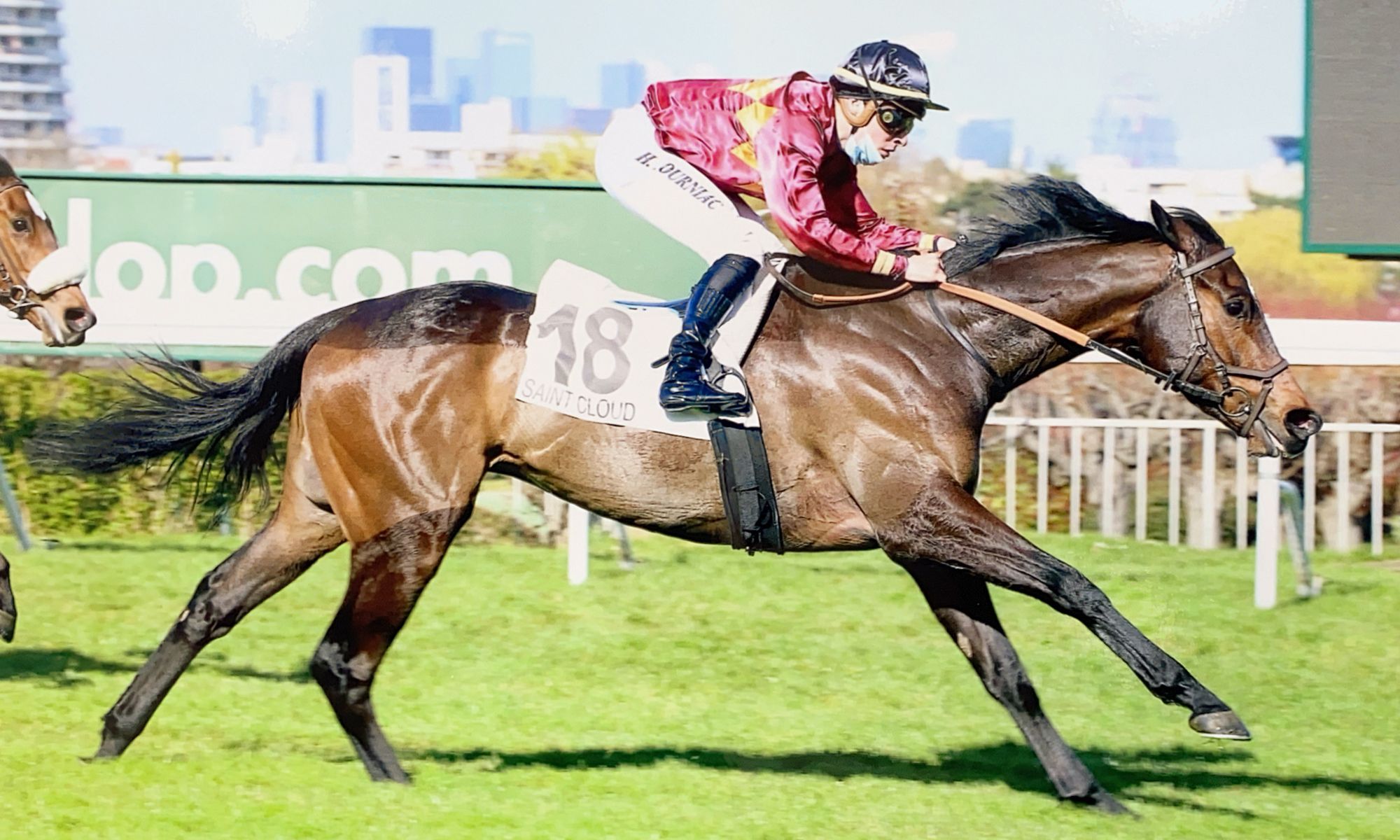
OK, so Rachel Alexander is the U.S. Horse of the Year. Zenyatta is not. It would be great if actual horse racing got going again so there would be something else to read about than this endless debate over an award that has very little to do with what actually happens on a racetrack. But now that the actual award is behind us, the new topic is when the two Big Mares will actually race each other. One of the themes that keep coming up on blogs across cyberspace is the worry that one or both will suffer catastrophic injuries in the year ahead. Does this not strike anyone as a stunning indictment on the state of American racing? Here you have two of the most outstanding equine athletes in modern times, and all fans are thinking is “wow, I hope they make it back alive.”  That tells me more than anything that the sport there is doomed. It doesn’t have to be that way. Goldikova is staying in training this year, too, and here in France, we’re all just thinking “cool – we get to see her race again this year.” We’re not thinking, “gee, I hope she’s still breathing in 2011.” Geez, people WAKE UP! Why is the American rate of death on the racetrack three times higher than anywhere else in the world?? Take a look at the obvious: The size and surface of your tracks, (racing around tight corners always the same direction), the distance of your races (most are sprints around a single, tight turn) and the permissiveness of race-day medication that ensures virtually every horse is running with a number of approved chemicals in his system. Now I see Santa Anita is considering going back to a dirt track, and some of the same people who are expressing concern over the safety of Zenyatta are cheering the potential dumping of the “plastic” track – which seems to have resulted in far fewer catastrophic injuries than the previous dirt surface. Doesn’t anybody remember grass? You know, the stuff that horses are born on, raised on and on which they learn to gallop? The solutions don’t have to be as difficult as everyone over there seems to make them.

Ironically, Jonathan Sheppard is being praised in the Daily Racing Form for his innovative training methods, unlike anyone has ever seen in America.  He actually gallops his horses on grass, on a farm. He doesn’t time his workouts, and some of his horses DON’T EVEN  RUN ON LASIX!!! Sounds like everyday training in Europe, except the Lasix part; here, it’s no Lasix – or anything else – allowed.

How it all works

A commenter on my last post wanted to know more about the French racing program, so here’s how it works in a nutshell:  The main flat racing season runs from March through mid-November, although things start to wind down pretty quickly by the end of October. We have winter racing on the all-weather tracks in Deauville, Pau, Cagnes-sur-Mer and Lyon, but these are all pretty recent – all opened within the past five years or so. Races are divided into “PMU” and “PMH” meetings. PMU meetings are races that can be bet on across the country and beyond, now, while PMH meetings are at the country tracks and you have to be present at the track to bet. There are hundreds of tracks across France, and there is some sort of PMU racing, whether flat, jumps or trotting, every day of the year.

For flat racing, the condition books come out about three times a year. The program doesn’t change all that much from year to year, so you pretty much know what to expect. An average race card will include two or three handicaps, two or three condition races and a claiming race or two.  Two-year-old racing starts in March, with short sprints of four or five furlongs, usually run on a straight. The distance builds through the year, working towards a mile and an eighth or a mile and a half by the end of the year. Two- and three-year-olds usually only run against horses of the same age, although there are some races pitting three-year-olds against older horses by the end of the season. Once horses get to be four, they usually have to face open company (meaning older horses). There are some races restricted to four-year-olds, but those get hard to come by near mid-season. There is also a good program for five-year-olds and older. Fillies and colts tend to run separately in the beginning two-year-old races, but after that, there isn’t much segregation by sex, except in the higher-level races. Fillies racing against colts is no big deal here, and it happens all the time. It seems to be quite different in America, where much is made of a filly running in mixed company.

Purses are good relative to training costs, and money is paid through fifth place, or seventh place in the big Tierce handicaps. The average PMU purse is 20,000 euros, with 10,000 to the winner. The Tierce handicaps are usually worth around 48,000, and a low-level claimer might be only 15,000, with 7,500 for the winner. Training costs run about 18,000 to 20,000 euros a year, so if your horse comes in the money a few times or wins a couple of races, you’ve covered your costs.

Claimers work much differently here than in America. Claims are put in AFTER the race, not before. Bids are made in a “silent auction” format; the claiming prices is the minimum one can bid, bulletins are put into a box, and when they are read out, the highest bid gets the horse. Owners can put in their own bid of they want to defend the horse and keep it, but the owner must then pay the difference between the claiming price and the amount he bid (and he still risks losing the horse if there is a higher bid). The minimum claiming price at a PMU meeting is 9,000 euros, and the maximum is 42,000 euros. Two or three times a year, there is a “claiming day,” when all the races on the card are claimers. Otherwise, there usually aren’t more than two or three claimers on any card.

Horses qualify for handicaps after having run three times to get a rating. The best way to get a nice low rating is to keep your horse in low-level claimers for those three races, and preferably not in the money. You know the saying: Keep yourself in the best company you can and your horses in the worst company you can.

Cabin fever

We’re snowed in again. Luckily, all the horses got out yesterday so it’s not that big a deal that all the horses stay tucked in with lots of hay and bran mash on the program for dinner. I’ve decided against racing at Cagnes-sur-Mer after all. We can’t train properly, and it’s too big of a risk to transport horses that far away and have to turn around and come back after racing because we can’t get boxes to stay. Racing around Paris starts in eight weeks’ time, on March 8, and that’s really not too long to wait.

Meanwhile, I’m not doing much, either. Stoking the fire. Figuring out how my new video-on-demand works (it’s pretty cool). Walking the dogs around the training tracks looking for signs of a thaw. Good old Prof the basset hound is 11 now, but winter has given him a second youth. He sneaks away hunting on almost every walk, and Cocoa occasionally disappears, too, although play is her prime directive. Like most dobermans, she likes to chase things that go fast, and that includes deer that Prof might accidentally flush out. I occasionally finish the tour with no dogs, but they both know the way home and will get there eventually. The other night, Cocoa disappeared for a good long time. I left the gate open and went to do night stable. By the time I was finished, I found she had come back to the yard – with a trophy. It was dark, so I didn’t see what she had in her mouth before she bounced over to me with a big grin and a wagging tail and dropped the entire head of a deer into my hands. I was horrified that she might have brought down the animal until my neighbor and I had a closer look. The head had clearly been severed with a hunting knife, probably by illegal hunters near the back of the training center. I was relieved Cocoa wasn’t guilty, but I could have lived without having a head handed to me.

You can tell by this post I really don’t have enough to do at the moment, but I’m trying to take advantage of the break because I know things are going to pick up soon. Once we can work normally again, Skid and Brazil need to come back to work, and there are the yearlings (well, two-year-olds now) to get moving. But not yet.

Getting the year off to a decent start

Getting to Deauville paid off: Our first two runners of the year both placed, with Blessing Belle fifth and Turfani second. Belle ran a decent race but didn’t decide to get serious until the last 100 meters, leaving her fifth again but beating 13 horses this time around instead of four, like last time. At least she’s consistent, and she seems to have come back fine, so we’ll look for something for her next down south. Turfani ran a very nice race to finish second in her 18-runner handicap, beaten just a neck. She also seems to have come back well, but I don’t know what we’ll do with her next. I hadn’t planned to race her in Cagnes-sur-Mer, but I may change my mind since she seems in such good form. So we start the year off with two checks, which is nice, and finish the Deauville winter season with one win and seven places from 13 starts. Flat racing now moves to Cagnes and Pau, so we have to do some serious traveling if we want to keep at it. Belle, Bay and Versaki will almost definitely have entries down south, and Turfani will let me know what she should do next. And as soon as the weather breaks, we’ll start to bring back the horses to prepare for the spring season.

Belle and Turfani off to Deauville

Belle and Turfani shipped out tonight to Deauville; Belle runs tomorrow and Turfani on Saturday. Bad weather caused authorities to restrict movement of bigger transports this morning, and the same might be likely tomorrow morning, so they had to go tonight or stay put. It will give us a chance to get both of them out on the track for a hack tomorrow morning, which is good, since both of them were stuck walking the courtyard this morning. I decided not to bother with Bay, because the track is likely to ride on the heavy side after recent snow up there, and he’s already told us once he’s not fond of that kind of going. I’m still figuring out how I’m going to get there, but I’ll decide whether to brave the car or not tomorrow morning. Otherwise, I’ll take a train and hope for the best.

Way, way too cold for France

Yeah, I know, I bitch about this all the time, every winter. But the winters seem to be getting worse. And every summer, we fail to learn from the past and let the time slip by without adding that second layer of insulation to the house or making sure we have a good supply of DRY firewood. But I digress. The big decision of the week is what to do with the horses who are ready to race. Turfani, Belle and Bay all have entries for Friday and Saturday in Deauville, and it’s the closing weekend of the meet so this is our last chance. They are all dead fit – Turfani ran Dec. 24, and Belle and Bay ran Dec. 30. Turfani could use a work before racing again, but she won’t get one. The training tracks are in the deep freeze, and even our “all-weather” strip is in no shape for work. Belle and Bay don’t need anything. But they’ve all been stuck walking the roads for the past two days, and we’re unlikely to get to do more before race day. So the big question: Can a horse race having done nothing but walk for the week before? Probably, since they’re all just coming off races. It’s not ideal, but the two fillies, especially, need the run. I’m still on the fence about Bay, who doesn’t seem to be handling the cold as well as the girls. Turfani is squealing and kicking down the walls and really needs to race, and Belle isn’t far behind her. The snow is supposed to start on Wednesday, and over the weekend we get freezing rain, so after these races, I think everyone will be on box rest until we can move safely. George is heading to Normandy tomorrow to be relieved of the burden of manhood. We need to transport him before the weather closes in on Wednesday. Wake me when it’s March.

Looking back, looking ahead

We don’t pay much attention to holidays around here; horses don’t know the difference between Christmas, Hanukkah, Eid al Adah and any other day of the year, so the routine doesn’t change much. But New Year’s Day makes some sense as a holiday for me, providing a good opportunity, however arbitrary, to take stock of what’s happened over the past year and look ahead to what might be accomplished this year. This marks my first calendar year as a professional trainer. I’ve had five wins and 16 places from 61 starts, with total winnings of 90,930 euros. This has been accomplished with a string of horses that were all purchased for less than 16,000 euros each (some for a lot less), with the exception of Hard Way, who I bred. That’s not too bad. I’ve fallen just short of my goal of a win percentage at 10 percent, which is where it should be, but we’re finishing the year on a good note, with several new owners and some bright prospects for 2010.

My New Year’s list of resolutions and hopes is not long. For the yard, I hope to build a string of better-quality horses with the help of my owners, who I hope will have a lot of fun and a fruitful season of victories. I hope the horses who are still here stay sound, productive and happy, and I hope for a safe and accident-free year for me and my staff of riders. For racing in general, I hope France and the rest of Europe continues to hold firm against the use of any race-day medication, and I hope the United States, Saudi Arabia and South America will change their rules and end the use of race-day drugs. For the respect and health of the horse, and the jockeys who risk their lives to ride them, running sound, medication-free horses is the only acceptable way the sport can go forward.

For me personally, there are the usual resolutions: Keep the weight down (starting tomorrow!), be more organized and try to govern my passions (or else, as Mr. Spock once famously said, “they will be my undoing”).

Happy New Year to all, and best of luck wherever your horses take you.

Belle and Bay grab places

Blessing Belle and DerringBay each finished fifth in their races in Deauville today, just enough to pick up checks. I’m especially pleased with Belle, who managed to open her bank account before the end of the year and ran a much more promising race than when she debuted for us a little over a month ago. Both races were 1,500 meters, which is too short for the both of them, but those were the races available. They finished well despite being outpaced, and it seems they came home well, too. If all stays well, they’ll both get a chance at 1,900 meters on Jan. 9, Deauville’s closing day.

Poor run from Pixie

Pixie turned in a dismal performance in Pau; I predicted she would either wire it or finish dead last, and unfortunately I was right – dead last. She broke well but then didn’t handle the track at all, and they went a breakneck pace. The fibersand in Pau looks a little deeper than Deauville on a good day, and there is a lot of kickback. That said, she may have just been surprised by it first time out (let’s try to find the bright side) and might do better next time. In any case, she will stay in the neighborhood, moving to David Henderson’s yard. He’s located in Mont de Marsan and there will be better chances for her to run down there. There is nothing left for her to try up here, since she will always be eliminated in Deauville, which wraps up on Jan. 9 in any case. There are a few more races for her in Pau, and after that she can try the turf at Cagnes sur Mer. I’m still convinced she can do something, and I’m hoping for a decent performance before she goes to the sales for potential brood mares in February. She has a fantastic paper for breeding, and she has won a race, so that’s where he future lies, I think.

Meanwhile, we’ll look ahead to Wednesday, when Blessing Belle finally gets to start in Deauville, and DerringBay will get another shot at that track.

Pixie heads south to Pau

Pixie’s Blue finally managed to make it into a race – in Pau, of all places. She left at 5 this morning for what should be a 10-hour or so trip, and will race tomorrow at 12:30 in a 1,500-meter handicap on the fibersand down there. I won’t be able to make it, so Valerie is handling the work; we were lucky to get Jean-Baptiste Hamel to ride. It’s a long trip, but it was impossible to get her into a race in Deauville, so since we got in, we had to take the chance. Pixie has done very little lately, between the frozen weather and the uncertainty of whether she would find a race somewhere. Suffice to say she will run very, very fresh down there, and I expect her to either set the pace or be very close to it. I hope Hamel fastens his seatbelt…